


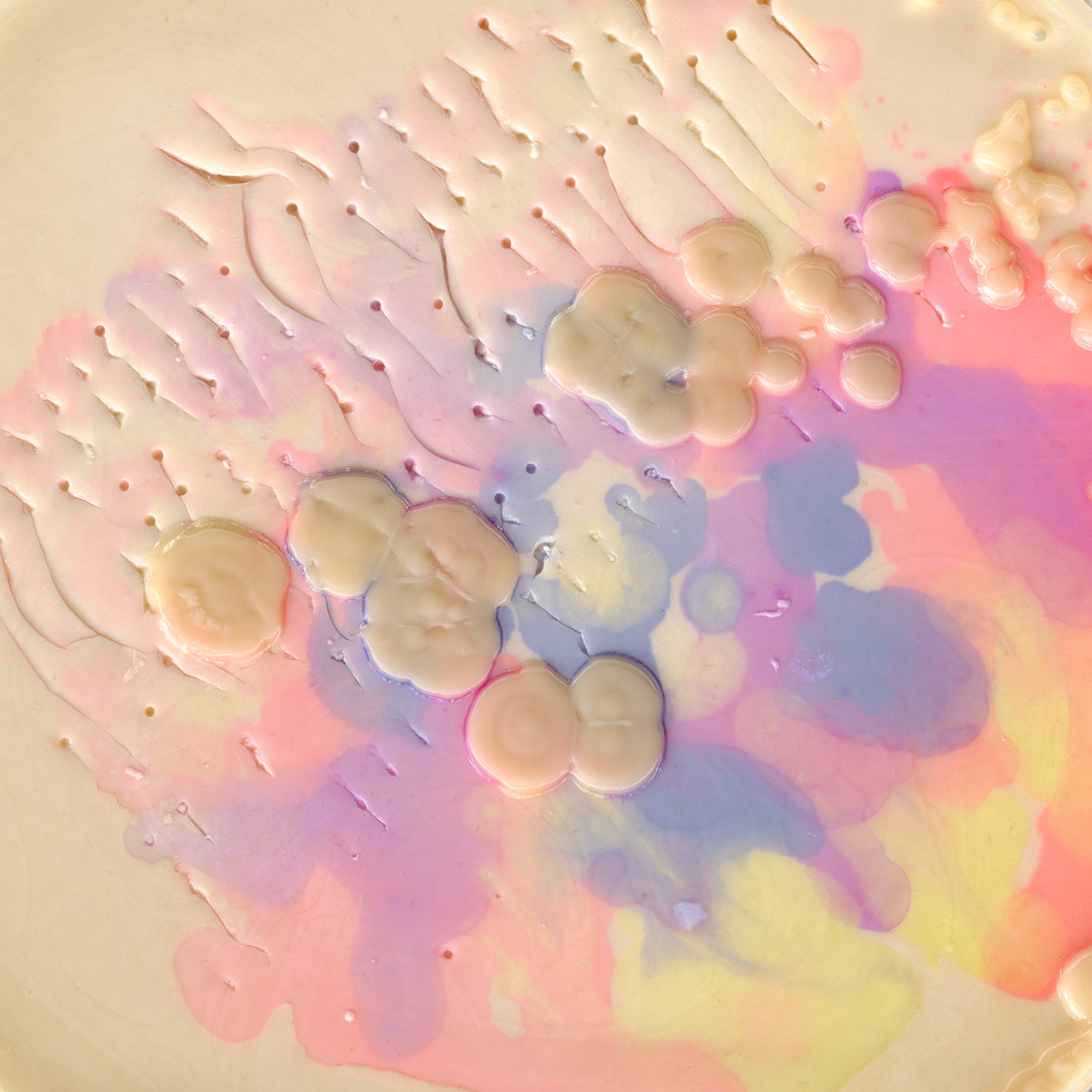
In a time of perceived dormancy, what emerges?
It’s been a while since I’ve written on Substack, so hello again. I’ve been dormant here, but sometimes that is necessary.
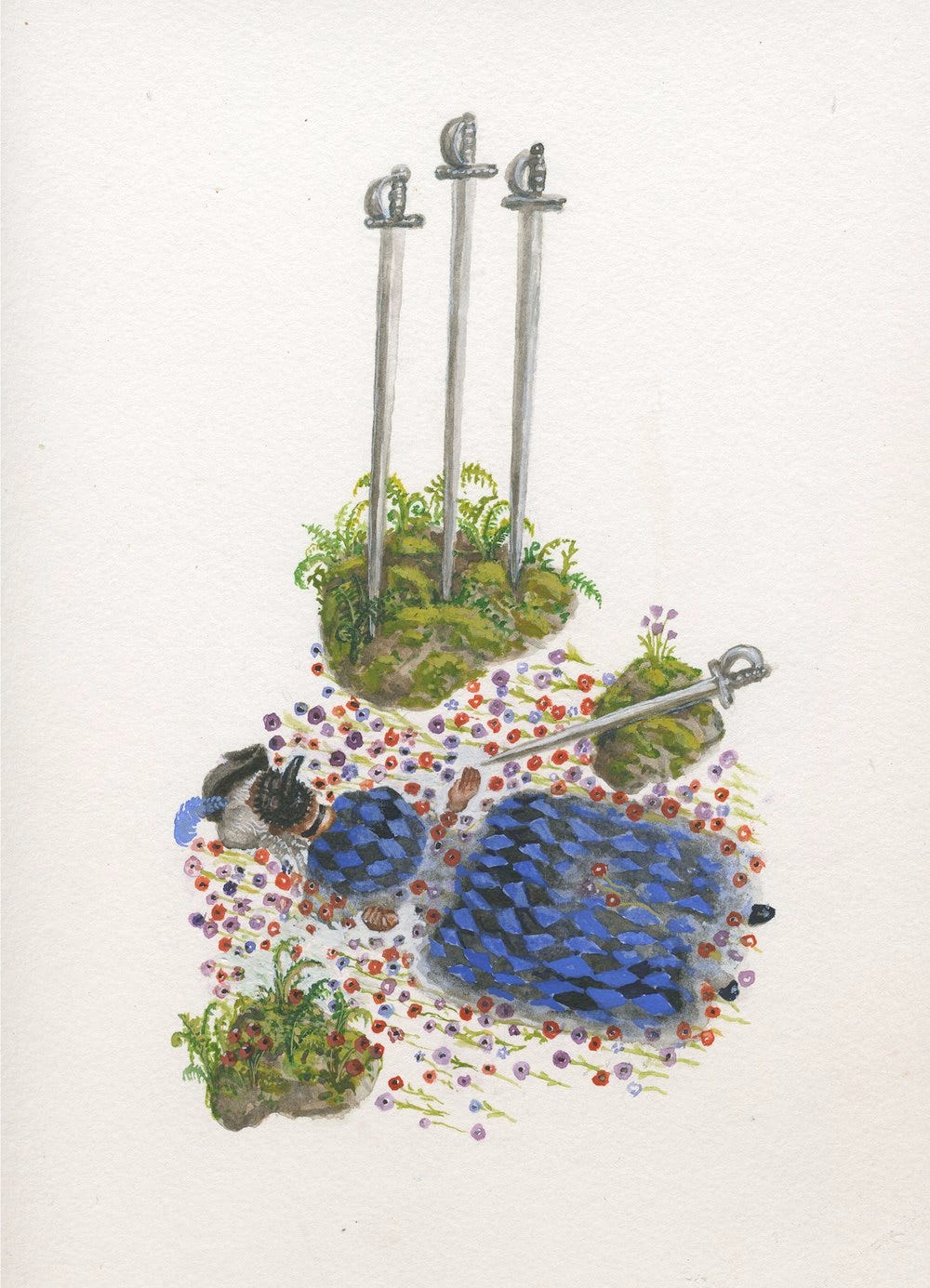
In the tarot card canon, one card I think about frequently is the 4 of swords. This is a card that marks a period of rest, respite, or reconfiguration. The rendering of this card I find especially potent is from Kahn & Selesnick‘s “Carnival at the End of the world“ deck. The card depicts a masked person melted (or buried) in the ground, surrounded by carefully arranged flowers that resemble poppies. The poppies are multicolored, dotted next to the figure, blooms pointing up and stems down, much like the posture of the figure. The elbow of the figure has melted below the flower dotted soil, but the hands are open and facing upwards, receptive and ready for the gifts from the unknown. This is the state I have been in, and it is necessary for the germination of new creative growth.
Germination from the Plexus
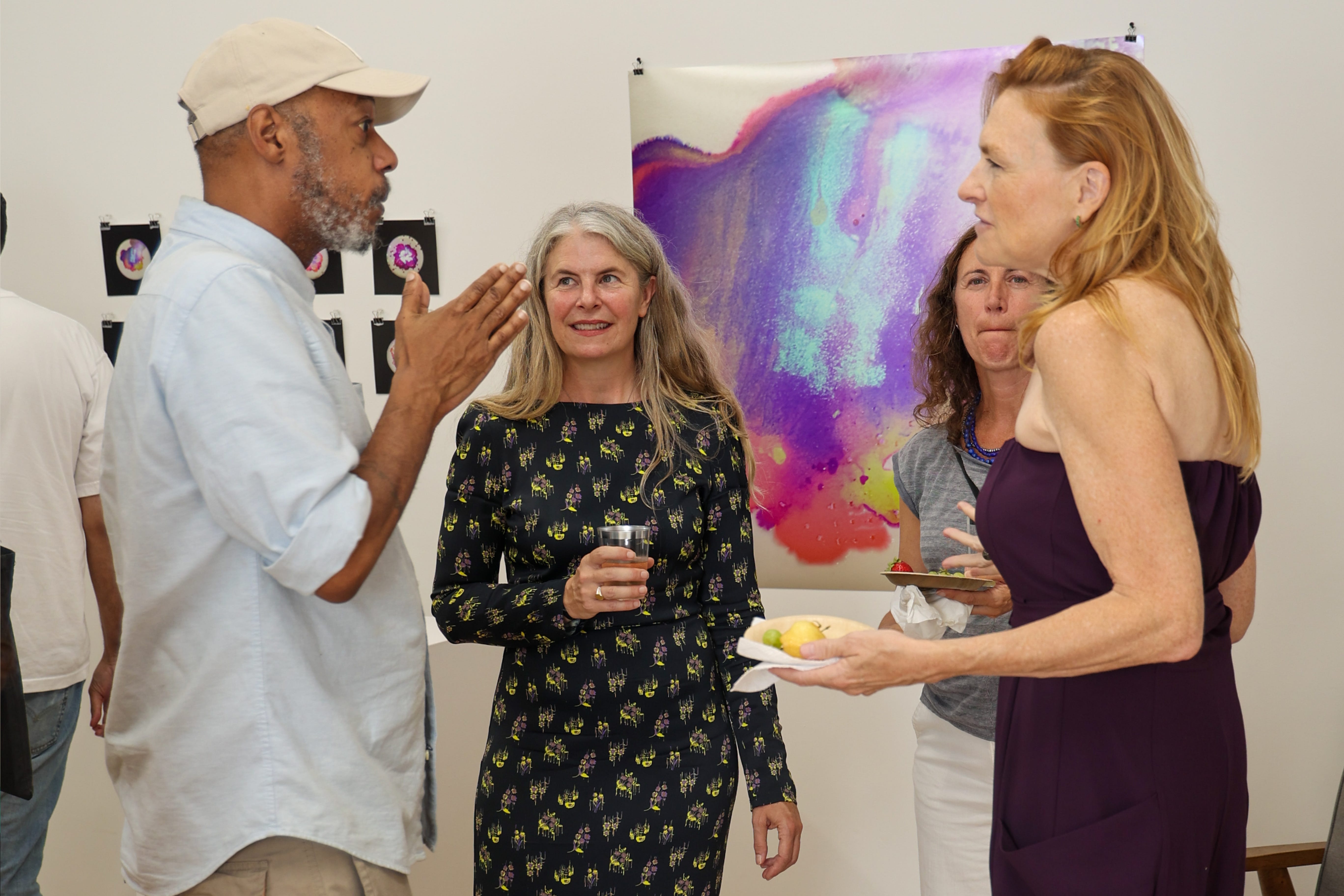
Over the past year or so, I have been both an online and a studio resident at Plexus Projects, an artist-run residency program in Brooklyn NY run by artist Laura Splan. My studio residency was this past August, and the residency was bookended by a studio show of recent work and appointments for studio visits, and closed with an invite-only open studio reception marking the end of the residency.
The opening presentation of Biogenetic Blooms was mostly hand-painted works, with a few exceptions. Those works are viewable in an online exhibition: https://www.plexusprojects.org/karen-ingram
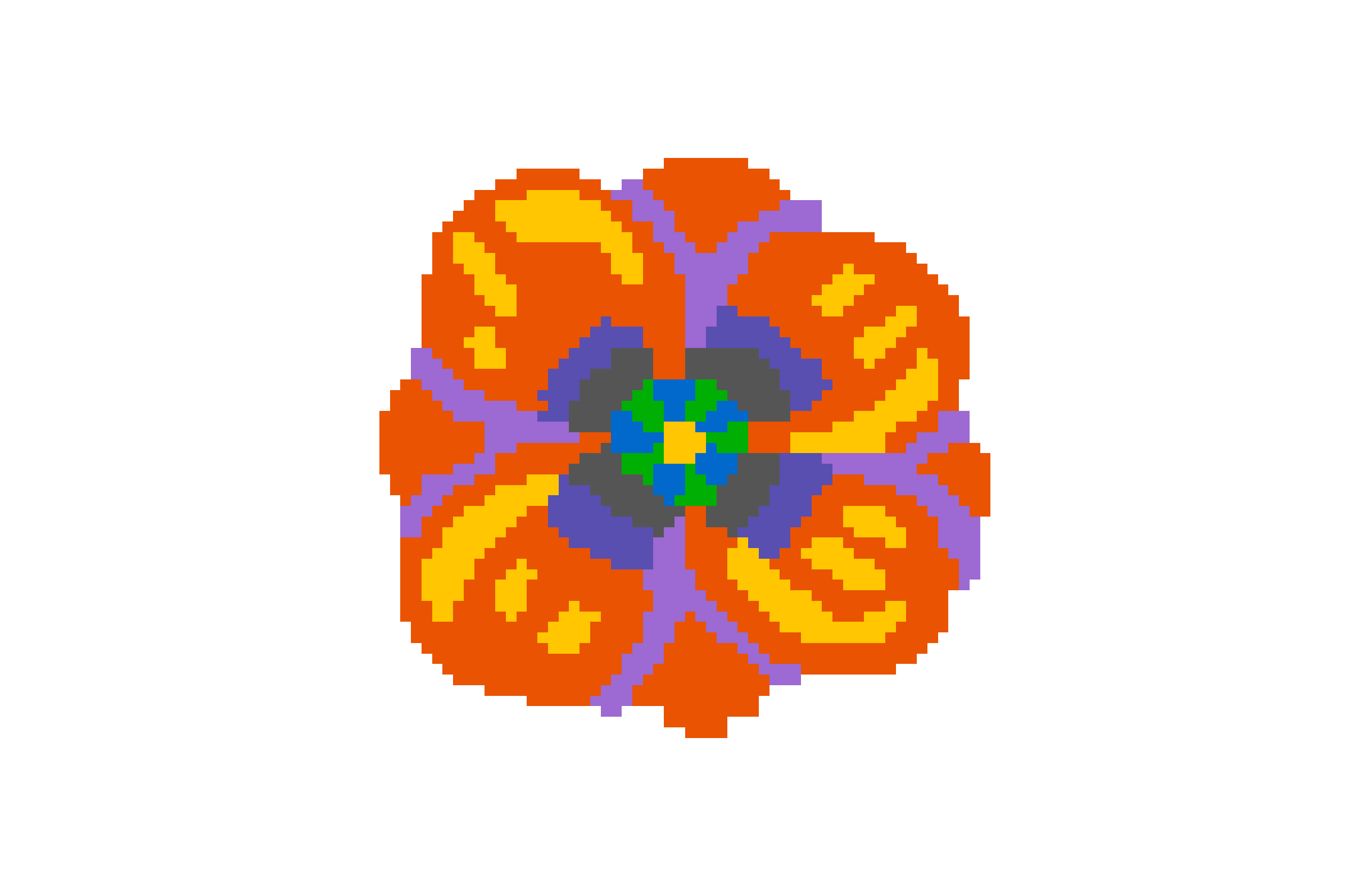
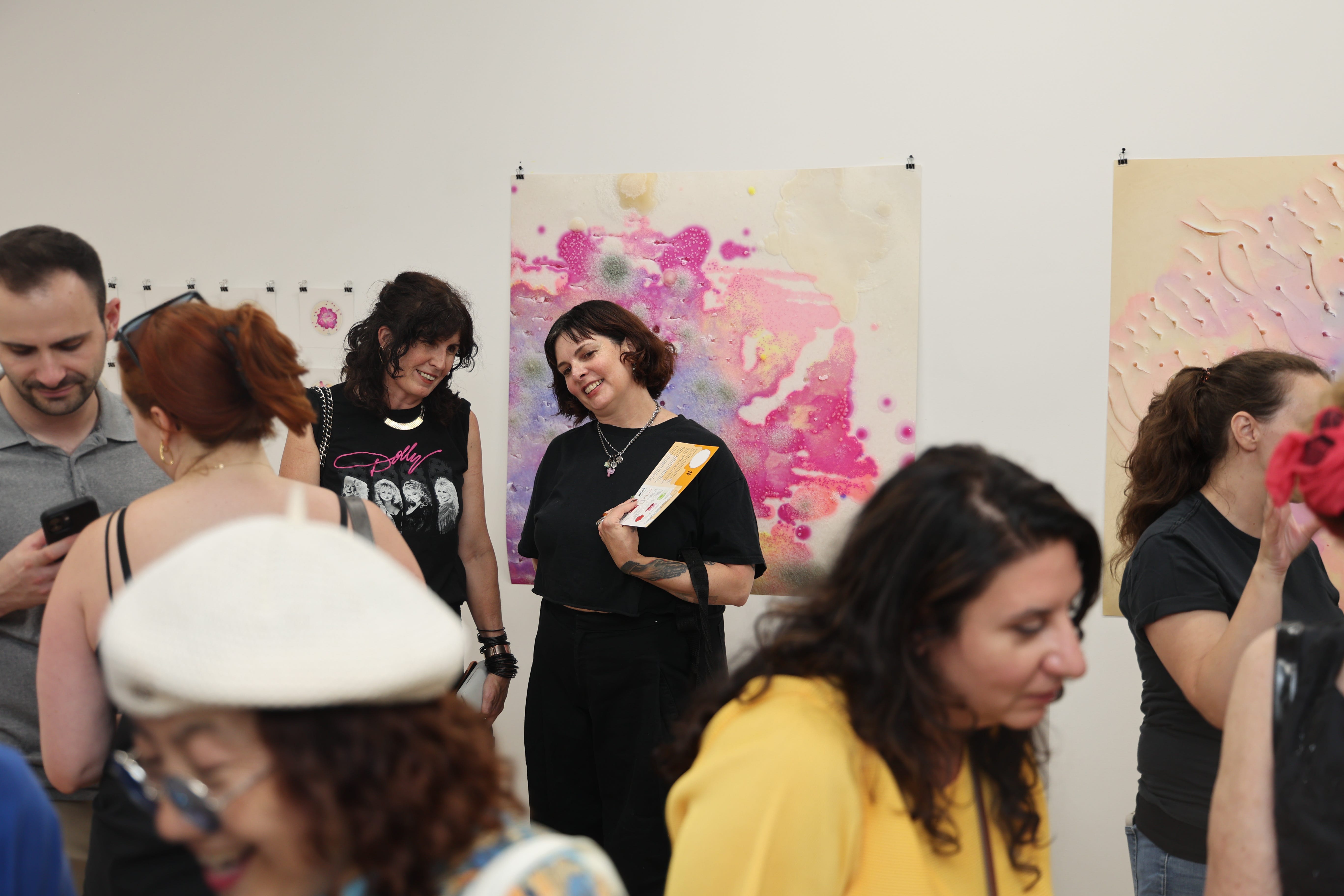
The closing open studio was a departure from the control of the hand-rendered aesthetic. Utilizing a bitmap poppy as the origin point for the works, the inspiration came from Petri dishes rendered a few years ago, but examined from a different point of view; that of topography.
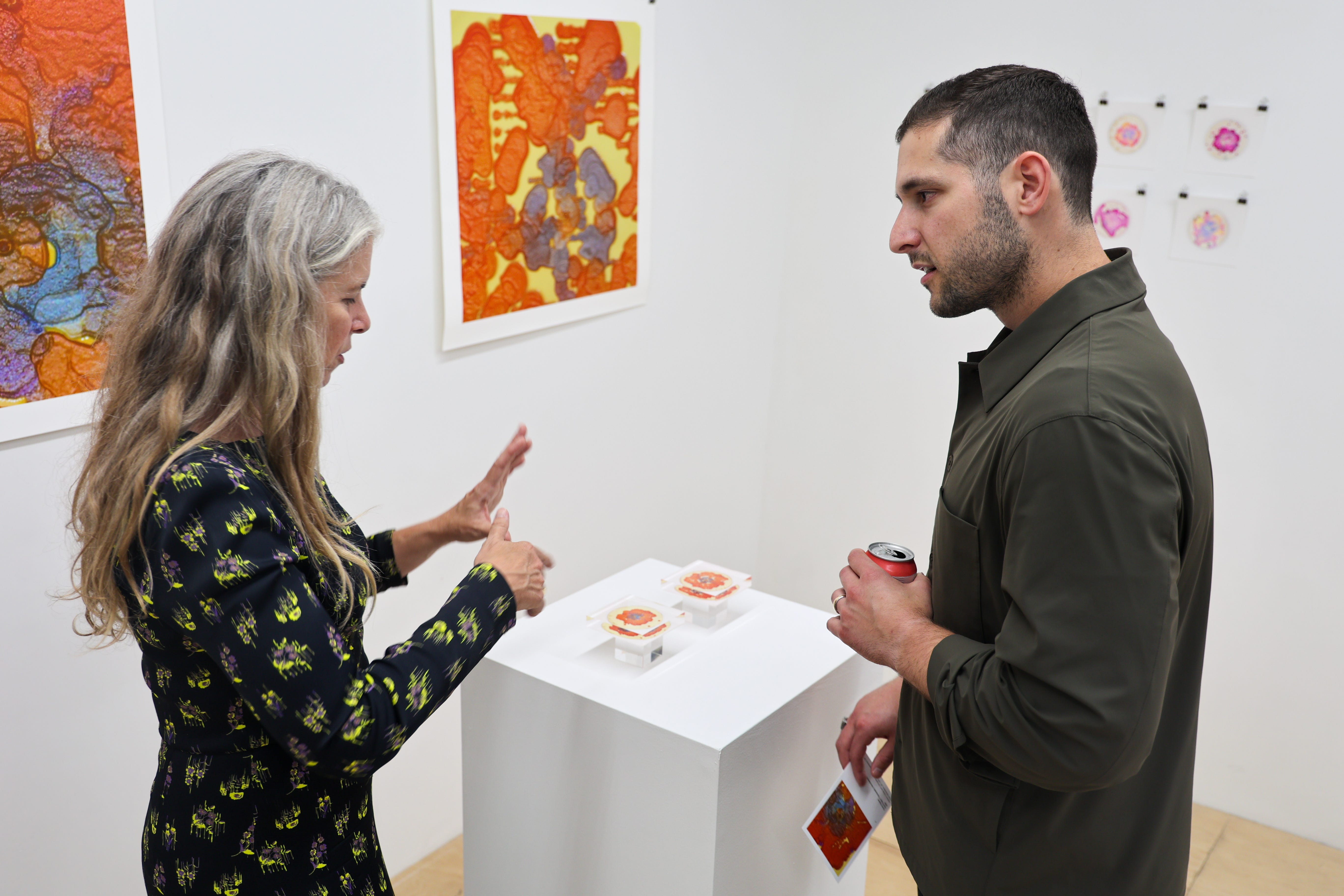
Microbial Topographies
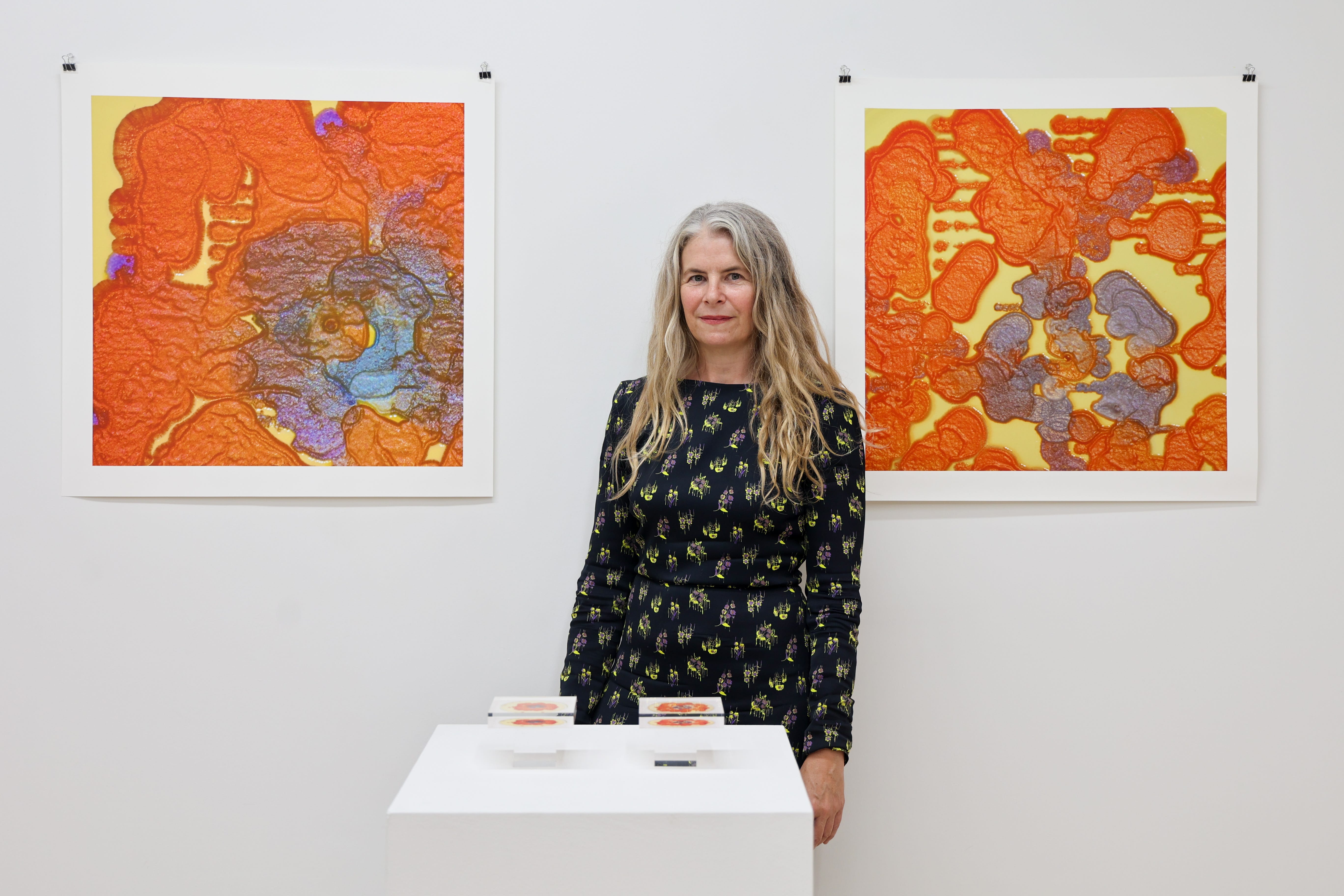
"Microbial Topographies" maps the growth patterns of microbial cultures. Bacterial colonies and engineered pigment-producing organisms are plotted onto specialized surfaces that read as landscape, geology, and topography.
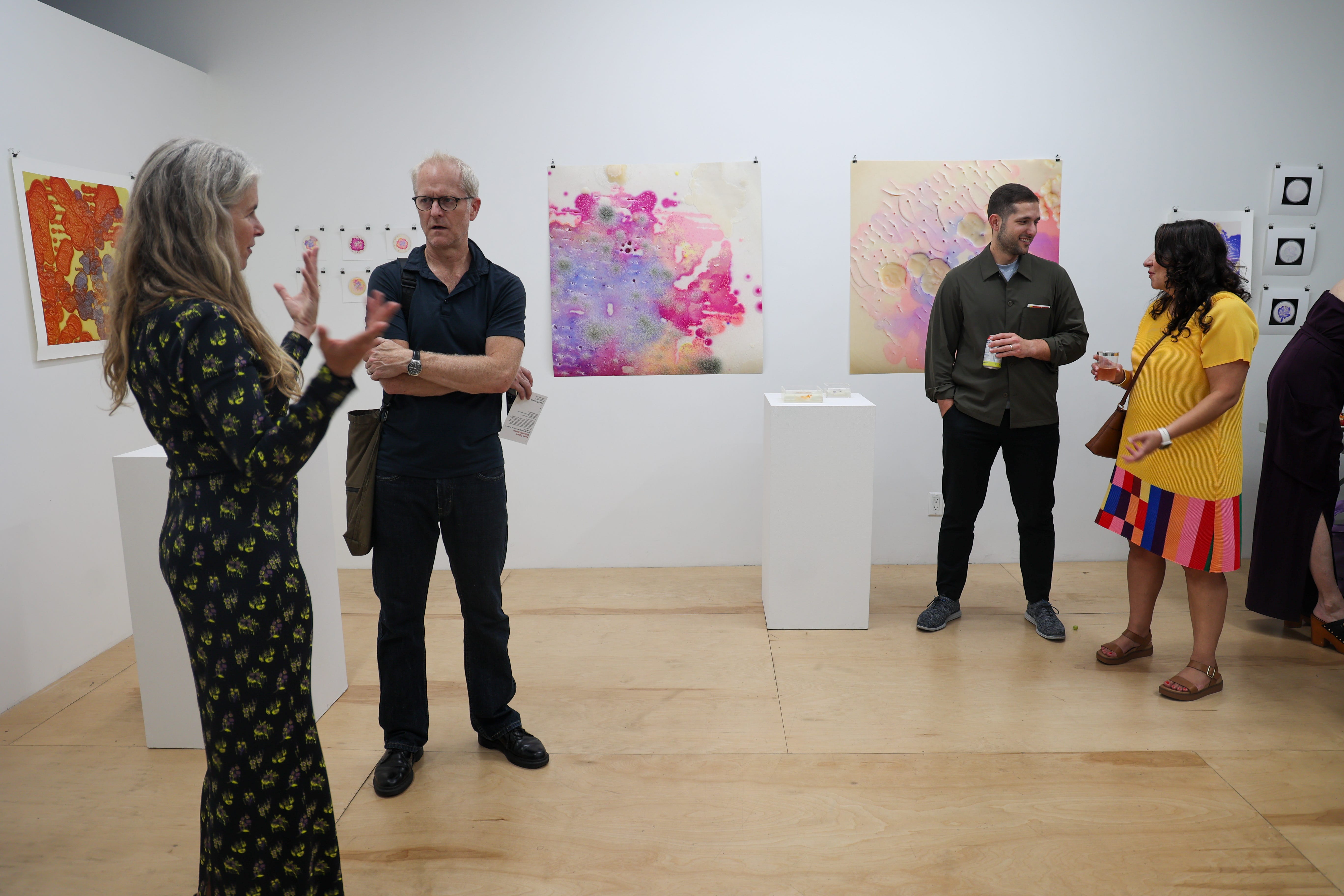
Each piece begins as an architected living system: cultures plotted, grown, and documented over days or weeks, their color shifts and branching structures functioning as both process and image. Liquid handling robots — precision instruments built for lab automation — are utilized to plot cultures in a human-designed formation. These large 40" x 40" topographies sit alongside images of the actual size Petri dish paintings.
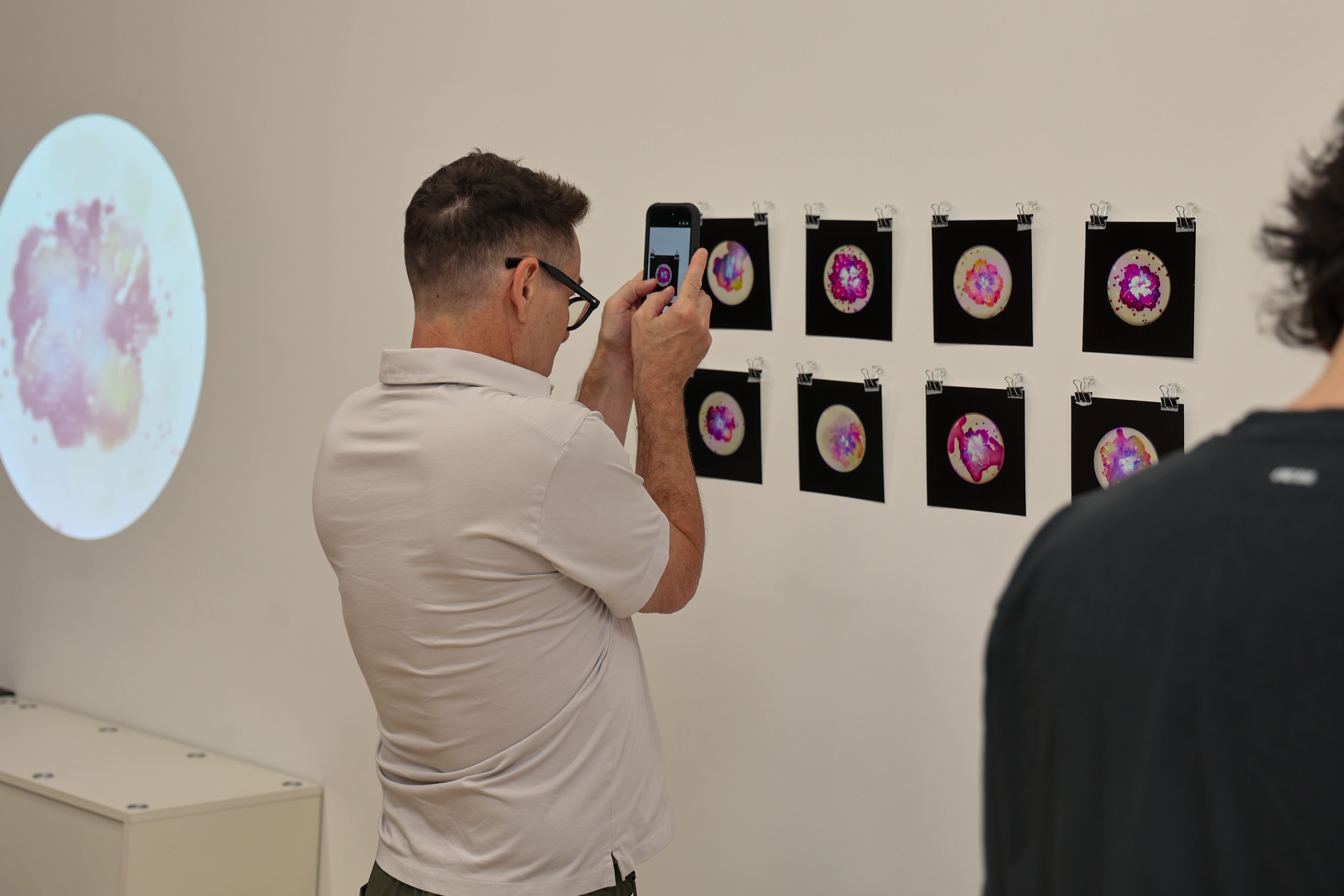
The robot constructs the fluorescent planetary terraforms, seeding the terrain with living microbes whose growth is part directed, part left to chance.
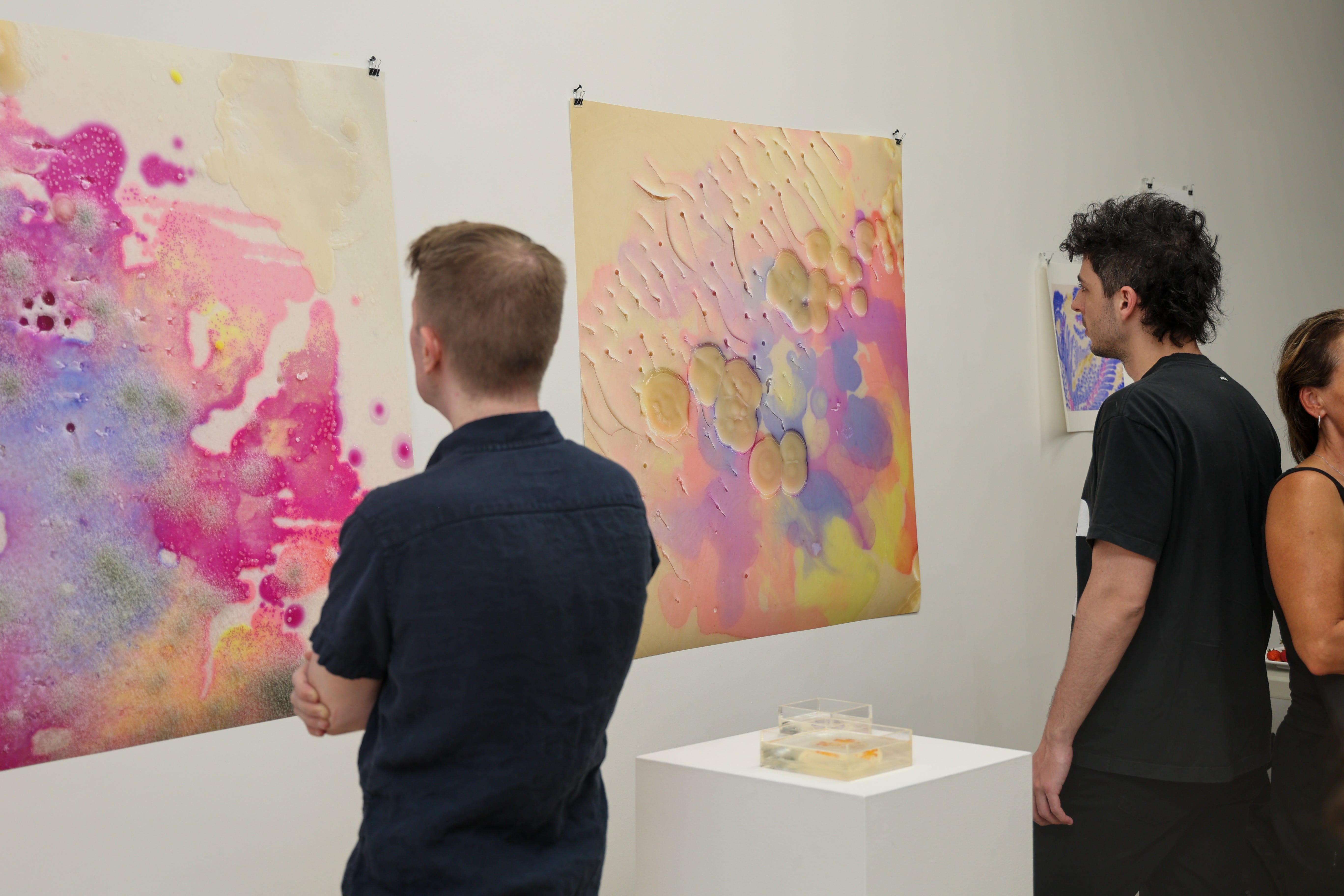
The occasional airborne spores, stray bacteria, and other uninvited microorganisms find their way into the cultures, introducing contamination that the piece absorbs rather than resists. These unplanned microorganisms deposit their colonies, mapping new terrain across the designed system. The works can also occasionally favor close ups of human anatomy; teeth, hair and hair follicles, and so on. Shown under different light sources, the forms reveal hidden anomalies.
Thanks to those who came by both the opening and closing open studios. More to come.
Of Renaissance Symbols and Modern Visions
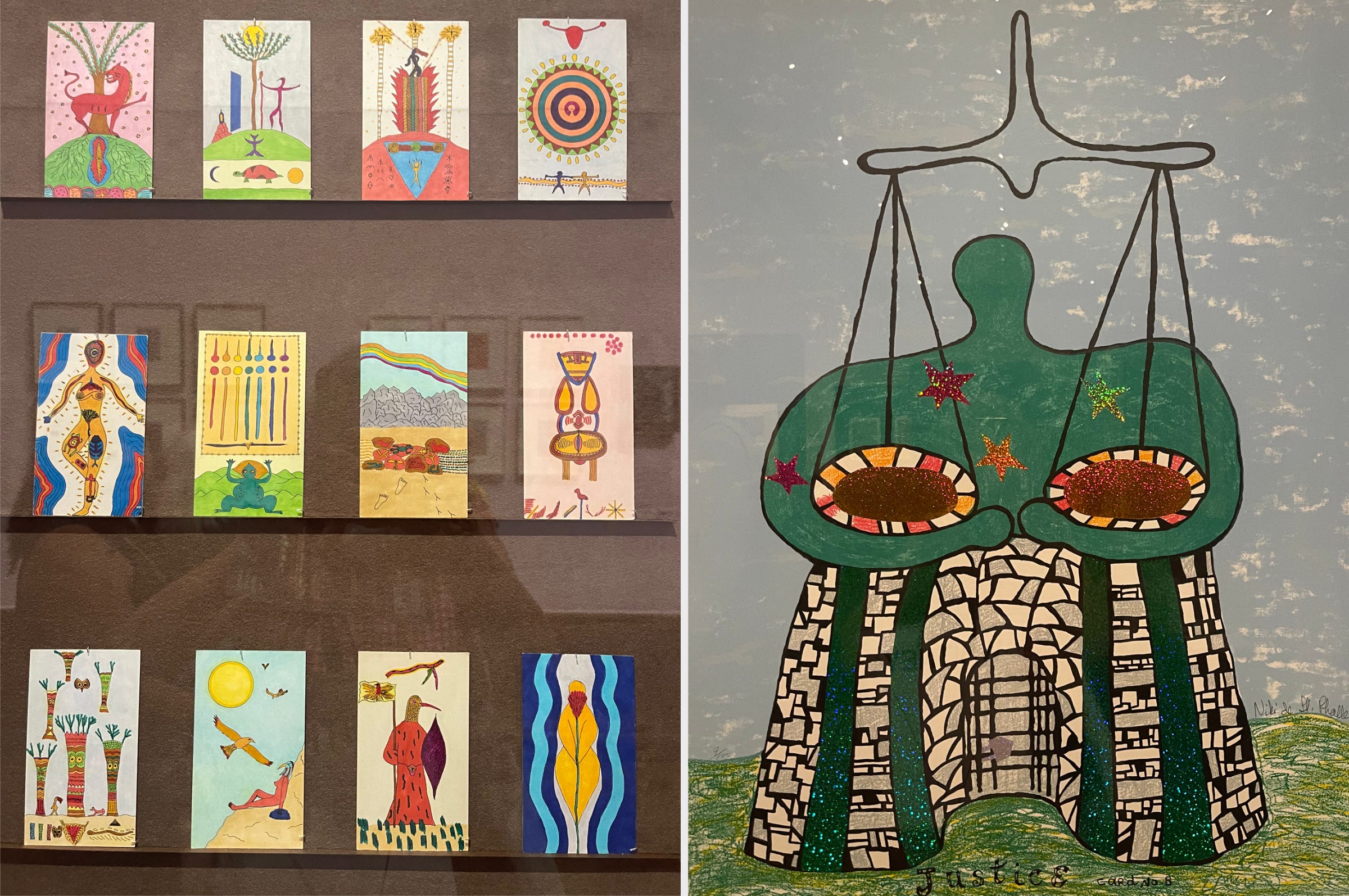
To close on the tarot, while in NY for the Plexus Projects residency, I paid a visit to the Morgan Library in Manhattan. The current exhibit "Tarot! Renaissance Symbols, Modern Visions" has one more month up. The exhibit highlights many important versions of the tarot in the compact exhibition space, all deserving of attention. Renaissance, surrealist, and modern depictions, including a work by British-Trinidadian artist Chris Ofili, created especially for the show, along with original works by Salvador Dali, Remedios Varo, Niki de Saint Phalle, Rachel Pollack, and many others. There's also a great piece on Artsy about the show. Highly recommended.
Thanks to everyone who has supported my work by reading and pledging via this Substack. There is more to come. Besos. <3
This is such an incredible show. Thank you for sharing.
Would you ever be interested in coming to Seattle for an event?